Showing posts with label personal training. Show all posts

Monday, November 5, 2012

Monday motivation (part III)


Happy Monday, people!

I hope you had a great weekend. I sure did.

Reasons to stay motivated - part 1.

Picture this: Sunday night (around 9 p.m.), I realized that we (my hubby and I) haven't done our workout for the day. My mister was really tired and didn't want to work out - although he loves his TRX routine. I told him I'd work out as well - I needed to get a few (hundred) crunches in, plus a few planks of course. He did his routine, I did my "core crunch" right beside him, our dog playing around us. I <3 family-time. Working out together is the bomb! Motivating each other to push a little further... We need to do this a lot more often.

We worked out for 20 minutes or so, but guess what? A 20-minute workout is better than a 0-minute workout. He was really happy that I gently pushed him, since he wouldn't have done his routine if it wasn't for me.

The lesson of the story: By staying motivated you'll help yourself, and others too. Spread the spark! Partner yourself with a friend, co-worker or a loved one - someone who'll support you and your goals without sabotaging them.

Have a great week,
/Ulrika


Thursday, November 1, 2012

Workout routines: Lower body plyo circuit


This is what really got me and my friend Maija going last month  - a lower body plyometric circuit! I presented my September workout schedule earlier (here), and now is the time to show you exactly what the plyo circuit is.

Get shredded with this awesome routine! Incorporate it into your workout schedule by replacing a lower body resistance training or a high intensity interval training (HIIT) routine with this. I recommend that you do this 1-2 times per week, keeping a minimum of 48 hours between workouts.

This is one of my favourite workout routines so far. It's short (it takes me about 35 minutes to complete five rounds), effective and I can totally feel my buns and thighs burning afterwards!

Before starting the circuit, make sure you're decently warmed up. By that, I mean a 10-15 minute light cardio on a stationary bike, treadmill or any cardio machine of your choice. You should have broken a bit of sweat before moving on to the circuit.

You'll need: a bench or a step, 2 x 3-5 kg dumbbells, a water bottle and a towel to wipe your sweat (trust me, you'll need it!). Bring a stopwatch to time your progress.

Remember to drink lots of water after the workout. Have a healthy carb-filled recovery drink or meal waiting for you ~30 minutes after working out.

Five rounds of:
Weighted reverse lunge from bench or step (15 reps per leg)
Mountainclimbers (30 seconds)
Bench jumps (10 reps)
Weighted lunge jumps (10 reps per leg)
Jumping jacks (30 seconds)

Try to keep minimal pauses between rounds, no pauses between exercises. Start off with three rounds and work your way up as your body adapts to the workout. This set shouldn't feel easy; in fact, this is one of the toughest sets I do during my workout week.


Breaking down the routine
Reverse lunge from bench or step
Get ready: Stand on an elevated platform, feet hip-width apart with two 3-5 kg dumbbells in each hand. 
Go: Step back with your right leg and lower your body until your left knee is bent at at least 90 degrees. Pause, then push through the left heel and step your right foot on the board. That's one rep. Do all reps on the right leg before stepping back with your left leg.

Mountainclimbers
Get ready: Start in a full plank position, with your palms straight under your shoulders and feet hip-width apart. Make sure you don't round your shoulders or let your hips sag!
Go: Alternate running your knees into your chest as fast as possible, sprinting for 30 seconds until you're completely out of breath.

Bench jumps
Get ready: Stand in front of your bench (or box) with your arms by your sides, feet hip-width apart.
Go: Jump onto your bench, landing as softly as possible, and jump back down. Repeat 10 times.

Lunge jumps
Get ready: Feet in a hip-width position, hands by your sides (holding dumbbells, if possible). Step back with your right leg and lower until your left knee is in a 90 degree angle.
Go: Jump up as fast as you can, extending your knees. Land softly in the same position, lower and repeat 10 times before stepping back with your left leg.

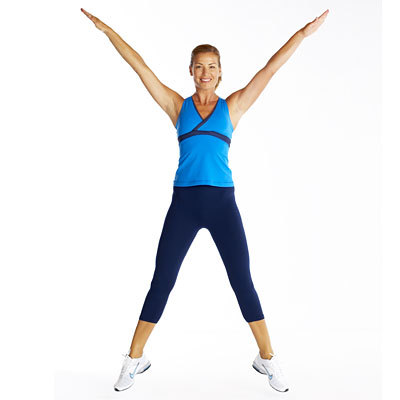
Jumping jacks
Get ready: Stand with your feet together, arms straight by your sides.
 Go: Jump and spread your feet, extending your arms up. Jump and bring them back together. Repeat for 30 seconds.
Tip: Keep your arms as straight as possible, stay on the balls of your feet.


Have a great workout!

/Ulrika

Picture source 1 2 3 4 5


Thursday, September 13, 2012

Need to lose a few pounds?


Are you trying to lose weight? I probably meet people just like you every day at work. The reasons for being overweight are always different; just like we are different from each other. The main goal is nearly always the same "to lose weight".

Whether it comes to shedding just a few pounds, toning your body a bit or losing a lot of weight you should still have a game plan. In my previous post I wrote about setting goals. I strongly recommend reading it before getting started.

After you've written down a list of goals and things you need to do, this is the next step. I recommend a dietary journal for at least two weeks to get you started. After keeping the log for a fortnight, analyze it. Check for possible pitfalls, your eating rhythm (did you eat 4-6 smaller meals or 2-3 bigger meals?), and the balance of your diet: protein/carbohydrate/fat - ratio. In case you have no idea what I just said, take your diet log to a personal trainer or nutritionist and you'll get started.

Keep a journal of everything that goes into your mouth (drinks too!) for two weeks, and let's see what happens.. Here are the things that you should write down:

- Time e.g. 8 a.m.
- What you ate and drank The amount should be as precise as possible. You don't need to have a cooking scale though; it could be something like this: two eggs, boiled hard; one tomato; two cups of coffee with milk and sugar.
- Who prepared it? Did you make your breakfast yourself or did you eat take-out?
- How hungry were you before eating? Use a scale from 1 to 5, 1 being "not hungry at all" and 5 being "starving". Trust me, this one is important.
- What were you doing while eating? Did you watch TV, read the newspaper or fiddle around with your iPhone while eating, did you have breakfast by yourself in silence or with your family?

These points are important and really helpful when it comes to analyzing a person's eating patterns. You'll see your eating habits in a different light after keeping a journal - and you'll know what to change. Every single one of you readers probably know what a healthy diet should consist of, now you just need to make it happen.If you feel lost in the jungle of "healthy eating", send me a message to ulrika(dot)lillsunde(at)gmail(dot)com and we'll work something out.

Try this - you'll thank me later.

/Ulrika

//Translation//Käännös
Aikaisemmassa tekstissäni kerroin, kuinka määrittelet itsellesi tavoitteet. Viimeisenä pisteenä tavoitteiden laatimisessa oli ruoka- ja treenipäiväkirjan pito. Tämän tekstin tarkoitus on tuoda sinulle ohjeet oikean ruokapäiväkirjan pitämiseen, jotta varmasti onnistut. 
Pidä ruokapäiväkirjaa kaksi viikkoa ja varmista, että syöt sinulle normaalisti kahden viikon aikana. Älä huijaa itseäsi, sillä analysointi on silloin huomattavasti vaikeampaa! Kahden viikon kirjoittelun jälkeen ruokapäiväkirja analysoidaan. Tarkkaile siis ateriarytmiäsi (söitkö 4-6 pientä ateriaa vai 2-3 suurta?) sekä ruokavaliosi monipuolisuutta ja tasapainoa (proteiinit/hiilihydraatit/rasvat-suhde). Jos et tiedä yhtään mistä puhun, vie ruokapäiväkirjasi Personal Trainerille niin pääset alkuun.

Tässä muutama asia, jotka olisi hyvä näkyä ruokapäiväkirjassasi:
- Kellonaika
- Mitä söit ja joit (esim. kaksi kananmunaa, yksi tomaatti, kaksi kuppia kahvia maidolla ja sokerilla)
- Kuka valmisti ruokasi? Söitkö itse tehdyn aamiaisen vai haitko sen kulmakuppilasta?
- Kuinka nälkäinen olit ennen ruokailua? Käytä asteikkoa 1-5, jossa 1 on "ei ollenkaan nälkäinen" ja 5 "pahin mahdollinen nälkä". Pyri havainnoimaan tätä numeroa, sillä se on tärkeä!
- Mitä teit ruokailun aikana? Katsoitko televisiota, luitko lehteä, näppäilitkö kännykkääsi, söitkö yksin hiljaisuudessa vai yhdessä perheesi kanssa?

Niin kuin aiemmin sanoin, kokeile tätä kahden viikon ajan. Näet ruokailutottumuksesi uudessa valossa ruokapäiväkirjan pitämisen jälkeen - tiedät varmasti mitä muuttaa. Uskoisin, että jokainen lukijani tietää miltä terveellinen ruokavalio näyttää, nyt ei muuta kuin toteuttamaan sitä! Jos koet olevasi eksyksissä itsellesi sopivan ruokavalion suhteen, lähetä minulle sähköpostia osoitteeseen ulrika(piste)lillsunde(at)gmail(piste)com niin katsotaan mitä voin tehdä.

Testaa tätä - kiität minua myöhemmin.

/Ulrika

Saturday, September 8, 2012

Setting goals


Effective goal setting means more than just writing down a wishlist and posting it on your fridge. Here's a few things you should keep in mind when setting goals and making an effective plan to reach them.


1. Determine the goal in a measurable way and set a deadline
Don't use vague terms. The phrase "I want to be stronger and better than before" won't carry you far, since it doesn't hold a specific, measurable goal or a deadline. I've been browsing a lot of fitness blogs and the phrase "I don't want to be perfect, I just want to be better than yesterday" comes up frequently. You probably know that I'm not very fond of this, since it doesn't really push you anywhere. Rather than saying "I want to be better" you should strive for a specific goal, like a specific dress size/body fat percentage/lifting a precise weight. These are just examples. Make sure you make the goals for yourself and no one else.
The date is really important! Make sure you have a specific deadline, or you'll procrastinate. Set a goal for this fall and for each single workout. Write down your goals. When you remember where you're going, you'll get there much faster. The more precise you are, the better.

2. Assess your starting physiology
Make an appointment with a personal trainer or a healthcare specialist. I recommend a full body composition analysis, for example the InBody or a body fat measurement with clamps. You'll get a realistic, objective analysis of your body composition.
In addition to the InBody or clamp measurements, I recommend a fitness test. Depending on your goals, a muscle fitness test (repeated squats, push-ups, back extensions and sit-ups) or an aerobic test (12 minute submaximal fitness test with a stationary bike or Cooper's test) are the ones to do. In case you have a specific goal like benchpressing 300 pounds, you should definitely test your bench press1RM (1 repetition maximum).
A hormonal profile, adrenal stress index and metabolic rate tests are excellent in assessing your situation in the beginning. Ask your physician more about testing your metabolism.
Assessing your starting physiology also helps you to get a realistic view of your limitations. For example, if you have a low testosterone level, you probably won't gain a lot of muscle mass in a short time.

3. Ask yourself the question "What am I willing to do to reach my goal?"
How many times a week are you ready to work out?
How much are you willing to change your diet?
Be realistic about these changes. A radical change in diet or exercise routines is never a good thing, since you're not likely to keep it up for a long time. Make small changes! I recommend one change a week, for example starting off with balancing your breakfast. I'll write a post about changing your diet in a few weeks.
No goals are achieved without making some sacrifices! This means that you'll really need to push yourself out of your comfort zone to gain results. People are used to staying inside their comfort zone, never changing their workouts because it's tough in the beginning. If you've been doing the same "fatburn" program on the same elliptical trainer for two years, you should definitely mix it up and try something different.
Remember: if it doesn't challenge you, it doesn't change you.
Don't underestimate how lapses in discipline can affect your training. If you drink like a fish on Friday and Saturday, Sunday and Monday won't be productive days when it comes to working out.

4. Determine the behaviours that go with step 3
Can you hear the difference between phrases "I'm trying to lose weight" and "I'm losing weight"? Stop trying and start doing. The same thing goes for behavioural changes, like "I will take my Omegas in the morning" vs. "I take my Omegas in the morning".
Your subconscious doesn't recognize the past or the future, so write positive behaviours in the present tense. That subtle change in phrasing changes your way of thinking and makes you change your behaviour on a longer term. Tell yourself that you can do this.

5. Make a list of intermediate goals with specific deadlines
You should be able to repeat the body composition tests (as presented in step 2) on a regular basis, for example every three to four months. If you're not progressing the way you should be, make a change in behaviour. Consult a trainer if you need help with balancing your workouts and diet.

6. Keep a detailed diet and training diary
Diet logs seem really hard to keep for some people, because they require honesty and seriously planning your meals. A well kept log helps you monitor and evaluate your progress and efficacy of your training program.
I recommend writing down feelings as well. A dietary journal is incomplete without a log about hunger (on a scale from 1 to 5, 1 being "not hungry at all" and 5 being "starving"). The same comes to training logs as well, write down the amount of reps you performed, the breaks you took and the weights you used - don't forget to write down the feeling you got from working out. It's really fun to look back on your old training and diet journals - I had so much fun reading my training log while I was on Atkins... Jeez, I really don't recommend working out like a maniac on really low carbs. But that's another story.

By following these steps you will reach your goals, just be true to yourself and your trainer. Give these few steps a try - for a change!

//Translation//Käännös
Tavoitteiden saavuttaminen vaatii tarkkaa suunnittelua ja selkeän, aikataulutetun ohjelman. Tässä lyhyesti muutama asia, joka kannattaa pitää mielessä tavoitteita laatiessa.
1. Aseta selkeä tavoite ja aikaraja. Mitä tarkempi olet tavoitteesi kanssa, sen parempi. Pyri välttämään epäselviä lauseita kuten "haluan olla parempi kuin ennen" - käytä mielummin mitattavia tavoitteita kuten vaatekokoa, rasvaprosenttia tai painoa, jonka haluat nostaa kuntosalilla. Aikarajan määrittäminen on erittäin tärkeää, ettei tavoitteesi saavuttaminen viivästy!
Aseta siis kokonaisvaltainen tavoite ja jaa se pienempiin osiin. Jokaisella harjoituksellakin pitäisi olla selkeä tavoite, jotta pysyt vauhdissa. Jos tarvitset apua tavoitteiden asettamisessa, ota yhteys personal traineriin tai fysioterapeuttiin.
2. Arvioi lähtötilanteesi. Suosittelen alkuun ainakin kehonkoostumusmittausta (esim. InBody tai pihtimittaus), lisäksi kuntotestiä (lihaskuntotestit, polkupyöräergometritesti tai Cooperin testi, riippuen tavoitteistasi). Jos tavoitteenasi on nostaa penkistä 100 kg, tehdään alkuun 1RM (yhden toiston maksimi) - testi. Lisäksi suosittelen ainakin hormonitasapainon testausta verikokein.
3. Kysy itseltäsi, mitä olet valmis muuttamaan saavuttaaksesi tavoitteesi. Kuinka monta kertaa viikossa olet valmis treenaamaan? Mitä olet valmis muuttamaan ruokavaliossasi?
4. Tee päätökset vaadittavan käyttäytymisen suhteen. Kerro alitajunnallesi preesenssissä, mitä aiot tehdä saavuttaaksesi tavoitteesi. Huomaatko eron lauseiden "yritän pudottaa painoani" ja "pudotan painoani" välillä? Kerro itsellesi, että pystyt tähän.
5. Tee itsellesi lista välitavoitteista aikarajoineen. Aiemmin suorittamasi testit pitää pystyä uusimaan tietyin väliajoin. Testien uusittaessa saat arvion siitä, kuinka treeni- ja ravinto-ohjelmasi on toiminut.
6. Pidä yksityiskohtaista treeni- ja ruokapäiväkirjaa. Kirjaa ylös kaikki syömisesi ja treenit, samoin tunteesi treenin aikana - ruokapäiväkirjaan kirjaa myös nälän tunne asteikolla 1-5 (1= ei ollenkaan nälkä, 5= kovin mahdollinen nälkä). Ruoka- ja treenipäiväkirjoja on myös hauskaa lukea myöhemmin, kun tilanteesi muuttuu.


Seuraa näitä askelia ja koe muutos!

Friday, July 27, 2012

InBody - following up my progress

Happy Friday, fit people!

I've been working out like crazy these past two weeks (and loving every single moment!), keeping a close eye on my diet and making sure that I rest enough.

My efforts have paid off. I did a body composition analysis on myself this morning, and I almost cried out from joy. I know my body has changed during these few weeks (11 days, to be exact), but I had no idea... The results were even better than I imagined.

I'm using an InBody 230 for my body composition analysis. The outputs are: weight, somatic muscle mass, fat mass, total body water, lean body mass, BMI (Body mass index), percent body fat, waist-hip ratio, basal metabolic rate, segmental muscle mass (i.e. muscle balance), segmental body fat mass and impendance of each segments. It also gives a "muscle control" and a "fat mass control", i.e. possible goals for weight loss or gain, either in muscle or fat mass, plus an exercise planner with energy expenditures in different activities.

How does it work?
Muscles, blood vessels and bones are high in water, which conducts electricity. Body fat mass is the type of tissue that conducts electricity poorly. The InBody measures body composition by sending a weak bioelectric current through the body (trough soles and palms) and calculates the amount of fat tissue in the body.
It's recommended to do the analysis in the morning (with an empty stomach) or at least two hours after the last meal. For reliable results, one should not exercise or go to the sauna right before doing the InBody.

You feed your personal information in the machine (age, gender, height) before the analysis and the InBody 230 gives a A4-sized printout that looks like this:

The InBody result sheet. Picture source: InBodyCentral

I, personally, look mostly at the muscle mass / body fat mass - ratio and the segmental lean and fat mass. All my personal training clients get the opportunity to do a body composition analysis, but not everyone wants to see their results, and that's perfectly OK with me. Especially older women don't like the idea of stepping on a scale in front of someone, and I have to respect that. For the record, I propably wouldn't do it myself.


The picture above is an analysis of my muscle balance, showing segmental muscle mass. According to the InBody, I have a lot more muscle mass in my left leg compared to my right leg. There's a significant difference between the strength too, since I've had some serious lower back problems (on the right side).
I won't show you the segmental fats yet.. Maybe in a year or two. Or never.


So, to my results... In two weeks, I have:
  • Gained 1,2 kg in somatic muscle mass
  • Lost 2,6 kg in fat of which:
  • lost 1,2 kg fat around my waist
  • lost 0,8 kg fat aroung my glutes and thighs

Now this is why I don't use a basic scale at home. My total weight loss in two weeks is just 0,7 kg, which is OK, but not awesome. My total body water amount is really high at the moment (+ 2kg compared to the results two weeks ago), and I bet it's just because I spent a really tough afternoon at the gym yesterday.

According to my InBody results printout, I'm overweight (no surprise there!). However, my muscle mass is a whopping 6 kg above average levels (compared to average 24y women). Screw you, body mass index ;)

As I've said before, I'm still really far from my goals, but I'll get there.. The InBody helps me set new (realistic) goals for the next few weeks. I keep track of my goals and progress with a motivational diary, which also holds all my InBody results sheets. I use the diary to document my feelings during my workouts, to collect inspirational and motivational pictures and quotes and sometimes as a nutritional diary.
I'll write an article on how to set realistic goals (and how to reach them!) in a few weeks, so stay tuned.


Have a great weekend!

Stay focused,
/Ulrika